Sonoran desert ant colonies present distinct architectural hazards that surface spraying cannot resolve. During extreme triple-digit summer heat in communities like Troon North and DC Ranch, species such as the red…
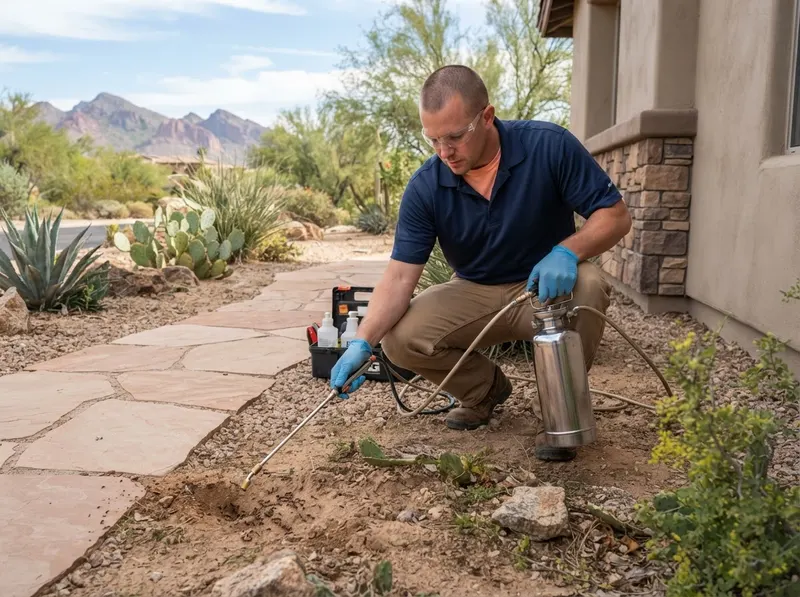
Sonoran desert ant colonies present distinct architectural hazards that surface spraying cannot resolve. During extreme triple-digit summer heat in communities like Troon North and DC Ranch, species such as the red harvester ant (Pogonomyrmex barbatus) and the southern fire ant (Solenopsis xyloni) excavate subterranean galleries reaching depths of 6 to 15 feet beneath decomposed granite, flagstone pool decks, and turf perimeters. Standard repellent surface sprays scatter foraging workers into satellite chambers rather than neutralizing the reproducing queen. Targeted elimination relies on metabolic inhibitors carried directly back to subterranean royal chambers by designated foragers, halting larval development entirely while keeping delicate native plantings along natural washes intact.
Decision guidance dictates selecting targeted colony baiting over broad perimeter soil drenching when properties harbor domestic pets, desert tortoises, or complex desert flora. If ant activity is restricted to exterior landscape beds near the McDowell Sonoran Preserve, targeted matrix baits eliminate subterranean nests in 7 to 14 days without releasing volatile organic compounds near breathing zones. If colonies breach stem walls or interior plumbing voids within Gainey Ranch or McCormick Ranch homes, direct structural micro-injections along weep screeds are required to intercept satellite queens before indoor nesting occurs. The operational trade-off centers on eradication speed versus nesting depth: superficial surface sprays show dead surface workers in 2 hours but leave root queens fertile, whereas systemic biological baits require 5 to 10 days to achieve total colony collapse at the root source.
Preventing secondary pest pressure requires eliminating mature ant super-colonies before monsoon activity begins. Large ant colonies serve as primary food sources for venomous desert bark scorpions and predatory ground spiders across Desert Mountain and Grayhawk. By applying non-toxic granular matrices that foraging workers carry down 8-foot vertical tunnels, specialists dismantle subterranean food reserves safely. Every application is calibrated strictly against Maricopa County environmental safety standards to ensure runoff does not impact local soil biomes, domestic dog runs, or adjacent citrus plantings.
Every job gets a firm, written price after a free on-site visit.
Tell us about your desert ant colony elimination job in Scottsdale and we'll send a clear, written quote, usually the same day.
 Desert Finch Pest Control