Scottsdale residential landscapes face severe vector spikes from March through November, driven by subterranean irrigation leaks, private resort-style swimming pools, and architectural water elements. In neighborhoods…
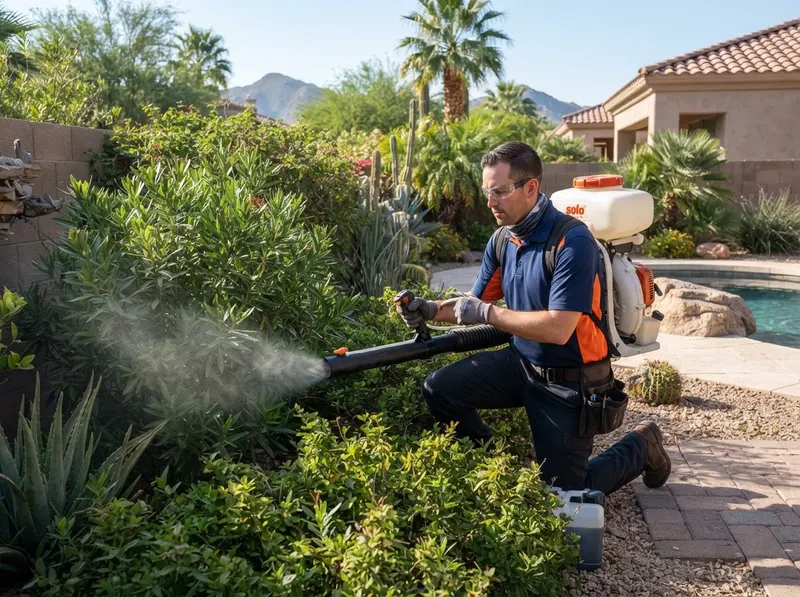
Scottsdale residential landscapes face severe vector spikes from March through November, driven by subterranean irrigation leaks, private resort-style swimming pools, and architectural water elements. In neighborhoods like McCormick Ranch and Gainey Ranch, man-made lakes and dense turf sprinkler systems create humid microclimates where Aedes aegypti deposit eggs above the waterline. In northern desert elevations such as DC Ranch, Troon North, and Silverleaf, natural boulder washes and drip emitters around desert xeriscaping provide protected, shaded incubators. Standard broad-spectrum chemical spraying often degrades sensitive native flora and introduces hazards to outdoor companion animals. A targeted reduction model instead utilizes biological larvicides, such as Bacillus thuringiensis israelensis (BTI), applied straight into retention basins, catch basins, and decorative fountains to neutralize larvae within 24 hours without destabilizing desert wildlife.
Selecting treatment options requires evaluating property water infrastructure against surrounding desert terrain. Properties backing up to the Scottsdale McDowell Sonoran Preserve or Pinnacle Peak Park experience heavy adult migrations seeking shade under covered patios and dense ironwood canopies during 110-degree summer heat. For estates featuring enclosed courtyards and heavy vegetation, barrier misting applied to the undersides of broadleaf foliage creates an active mortality zone that interrupts the 7-to-10-day reproductive cycle. If a property features only xeriscaping with minimal standing features, localized harbor reduction and subterranean valve box treatments provide sufficient defense, avoiding unneeded barrier fogging. The structural trade-off centers on application frequency: standard treatments require monthly replenishment during peak heat, whereas integrated source elimination demands zero long-term residual chemicals once physical harbor sites dry up.
Implementation proceeds through four disciplined phases. Step 1: Technicians conduct a 360-degree perimeter audit, mapping storm drains, AC condensation lines, low-drainage planters, and drip lines. Step 2: Standing water zones receive non-toxic micro-encapsulated larvicides that target vector larvae without endangering family dogs or native pollinators. Step 3: Targeted residual applications coat adult resting canopies, perimeter weep screeds, and shaded patio recesses. Step 4: Technicians clear organic debris from drainage paths, providing property owners with a documented site plan to permanently eliminate micro-reservoirs. All visits operate on precise arrival windows, eliminating open-ended contractor delays and requiring no mandatory auto-renew annual obligations.
Every job gets a firm, written price after a free on-site visit.
Tell us about your mosquito reduction program job in Scottsdale and we'll send a clear, written quote, usually the same day.
 Desert Finch Pest Control